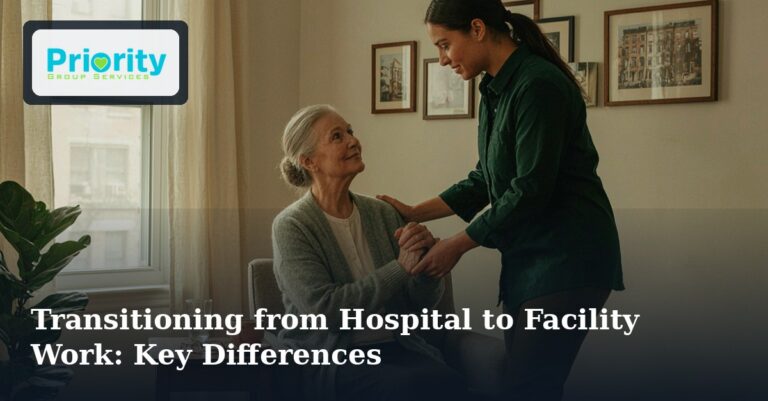
Transitioning from a hospital to a facility setting can be a significant change for both healthcare professionals and individuals with intellectual and developmental disabilities (I/DD). This guide will highlight the key differences and provide support for those making this move, ensuring a smooth transition.
Understanding NJ DDD Services
NJ DDD services are designed to provide comprehensive support to individuals with I/DD, covering everything from healthcare to daily living assistance. When transitioning from a hospital to a facility setting, it’s essential to understand the specific services and support coordination available. Support coordination agencies like Priority Group Services play a crucial role in navigating the process, ensuring that everyone involved is well-prepared and informed.
Practical Example
For instance, if a family is transitioning their loved one from a hospital to a facility, a support coordinator from Priority Group Services can help them understand what daily living assistance and healthcare support the facility offers. They can also assist in setting up an Individual Service Plan (ISP) that aligns with the individual’s specific needs. This ensures that the individual receives the right care and support, tailored to their unique situation.
Key Differences in Work Environment
Transitioning from a hospital to a facility setting involves adapting to a different pace and work environment. Hospitals often require quick responses and rapid decision-making, while facilities focus on consistent, long-term care. This shift can affect day-to-day responsibilities and the type of support needed. Facilities typically offer more routine care and less acute medical interventions, which can be beneficial for individuals with I/DD and their families.
Practical Example
A healthcare professional moving from a hospital to a facility might find that their daily routine is more predictable and less hectic. Instead of responding to emergencies, they might focus on regular medication management, personal care, and social activities. For example, a nurse might spend more time ensuring patients take their medications at the right times and participate in daily activities like exercise and crafts, rather than dealing with sudden medical crises. This change can be beneficial for individuals with I/DD, as it ensures they receive consistent care.
Support Coordination and Teamwork
Support coordination is a vital aspect of NJ DDD services, providing a bridge between healthcare professionals and individuals with I/DD. When transitioning from a hospital to a facility, the role of support coordination becomes even more critical. Support coordinators help families understand the services available, work with facility staff to ensure proper care, and facilitate communication between all parties involved. This collaborative approach ensures that everyone is on the same page and that the individual’s needs are met effectively.
Practical Example
Consider a situation where a facility is transitioning a new resident from a hospital. The support coordinator works closely with the family to understand the resident’s needs and preferences, then collaborates with the facility staff to create a personalized care plan. They also ensure that the family and facility staff communicate effectively, addressing any concerns or issues that arise. For instance, if a family expresses concern about their loved one’s dietary restrictions, the support coordinator can work with the facility’s dietitian to tailor meals that meet those needs, ensuring a smooth transition.
Frequently Asked Questions
What services are available for individuals with I/DD in NJ facilities?
NJ facilities provide a range of services including daily living assistance, healthcare support, and social activities. Support coordinators help families navigate these services and ensure they meet the individual’s specific needs. For example, a facility might offer assistance with bathing, dressing, and meal preparation, as well as recreational activities that promote social interaction and overall well-being.
How can I ensure a smooth transition from hospital to facility?
Effective communication and planning are key. Work closely with support coordinators and facility staff to understand the care plan, address any concerns, and ensure a smooth transition for both the individual and their family. It’s important to have open lines of communication and regular updates to address any issues that may arise during the transition.
What should I consider when transitioning from hospital to facility work as a healthcare professional?
Consider the pace and type of care you will be providing. Facility work often involves more routine care and less acute medical interventions. Understanding these differences will help you prepare for the transition and excel in your new role. For example, while you might be less involved in emergency situations, you will play a key role in ensuring that residents receive consistent, high-quality care on a daily basis.
How do support coordinators assist in the transition?
Support coordinators play a crucial role by helping families and healthcare professionals understand the services available, working with facility staff to ensure proper care, and facilitating communication between all parties involved. They ensure that everyone is on the same page and that the individual’s needs are met effectively. For instance, they can help families understand the facility’s policies and procedures, and work with staff to develop a personalized care plan that aligns with the individual’s specific needs.
Conclusion
Transitioning from a hospital to a facility setting can be a significant change, but with the right support and understanding, it can be a positive move for everyone involved. For healthcare professionals looking to make this transition, consider the unique aspects of facility work and the support available through NJ DDD services. Apply for a nursing or CNA role in NJ — https://prioritygroupsnj.org/contact/.
This article is for informational purposes only and is not medical advice. Please consult a licensed healthcare professional about your specific situation.