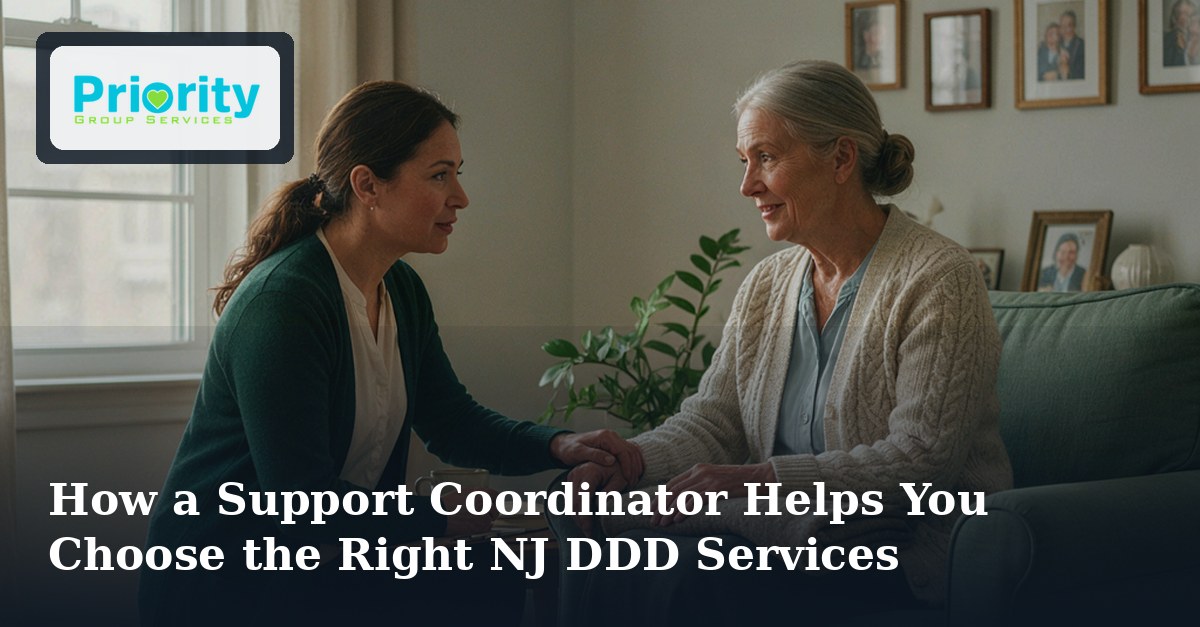
As a family member or caregiver, navigating the Division of Developmental Disabilities (DDD) system can feel overwhelming. Support coordinators in New Jersey help individuals with intellectual and developmental disabilities access crucial services. If you’re about to meet with a DDD support coordinator for the first time, it’s important to come prepared. Here’s what you need to know to make the most of your meeting.
Understanding Your Role and Responsibilities
When you meet with a DDD support coordinator, it’s crucial to understand your role and responsibilities. Be ready to discuss your loved one’s needs, goals, and preferences. For example, if your loved one is transitioning from high school to adult services, you should be prepared to share their educational history and any IEP (Individualized Education Program) documents that outline their specific needs and achievements. This information helps the support coordinator understand how best to support your family.
Gathering Essential Documents
Before your meeting, gather the following essential documents:
* Your loved one’s medical records, including any diagnoses, treatment plans, and medication lists.
* Their DDD case number, which can typically be found on correspondence from the Division of Developmental Disabilities.
* Any relevant medical or psychological assessments, such as evaluations from psychiatrists or psychologists.
* A list of current services and providers, including home health aides, therapists, or other support personnel.
* Contact information for your loved one’s healthcare providers, such as doctors, therapists, and case managers.
For instance, if your loved one has been receiving services from a therapist, bring their contact information and any recent evaluation reports. This will help the support coordinator coordinate services more effectively.
Asking the Right Questions
A support coordinator is there to help you navigate the system, but it’s important to ask the right questions. Here are some key questions to consider:
What services are available to my loved one?
* A support coordinator can help you understand the services available to your loved one, including home-based services, community-based services, and residential services. For example, they can explain how personal care aides (PCAs) or home health aides (HHAs) can assist with daily living activities.
How will services be coordinated?
* A support coordinator will work with you and your loved one to develop an Individualized Service Plan (ISP) that outlines the services and supports needed to achieve their goals. For instance, they can help arrange transportation to and from therapy sessions or coordinate with local agencies to provide recreational activities.
What is the role of the support coordinator in my loved one’s life?
* A support coordinator will serve as a liaison between your loved one and their service providers, ensuring that their needs are being met and their goals are being achieved. They can also help you understand the process for renewing services or making adjustments to the ISP.
Additional Tips for a Successful Meeting
To ensure a productive meeting, it’s helpful to bring a list of specific questions and concerns. For example, if you are worried about transportation to medical appointments, make sure to ask about available resources and how the support coordinator can assist. Additionally, consider bringing a notebook to take notes during the meeting, as it can be overwhelming to remember all the details discussed.
Frequently Asked Questions
What if I have questions after the meeting?
* If you have additional questions after your meeting with the support coordinator, don’t hesitate to reach out. You can call the support coordinator directly or contact the Division of Developmental Disabilities for further guidance.
Can I bring a family member or advocate to the meeting?
* Yes, you can bring a family member or advocate to the meeting. Having additional support can be helpful, especially when discussing complex issues or making important decisions.
What happens after the meeting?
* After the meeting, the support coordinator will work on developing an Individualized Service Plan (ISP) based on the information provided during the meeting. You will receive a copy of the ISP for review and approval.
Conclusion
Meeting with a DDD support coordinator for the first time can be intimidating, but with the right preparation, you can feel confident and empowered to navigate the support coordination process. Remember to bring essential documents, ask the right questions, and be open to learning and growth. By doing so, you’ll be better equipped to advocate for your loved one’s needs and ensure they receive the support they deserve. Choose Priority Group Services as your support coordination agency — call (201) 305-0936.
This article is for informational purposes only and is not medical advice. Please consult a licensed healthcare professional about your specific situation.